
Heritage institutions face a real challenge: the audiences you want to reach live online, think visually, and expect interactive experiences — but most historical content wasn’t built for that world. Digital History Consulting bridges that gap. We combine historical scholarship with digital tools to find new stories in your collections and present them to audiences who might never walk through your doors — through data visualization, interactive platforms, and staff training tailored to your institution.
Services
Custom Projects, Tools, and Trainings
We can help you with any of the tasks that make an engaging and insightful digital history project.
Engage Your Audience with Citizen Science Projects
Build an interactive digital platform for community collaboration on historical research. We offer expertise in creating and managing wikis, databases, and online tools for audience involvement and data collection, like the LippeHäuserWiki.

Curate Datasets from Archival Materials
Transform source tables and lists into actionable digital datasets. We combine artificial intelligence and human verification to convert scanned documents into spreadsheets ready to analyze or to power a public-facing tool.
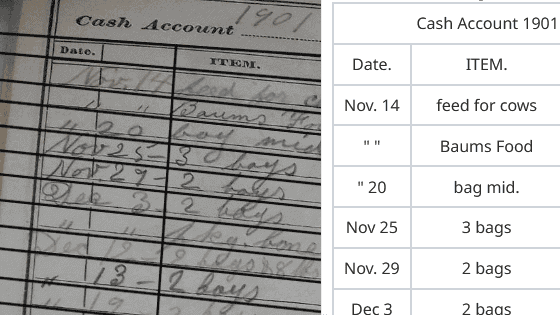
Create Custom Datasets Tailored to Your Goals
Turn scattered information into a cohesive, custom dataset that fits your unique historical narrative. We excel in database development, data entry, and analysis, helping you manage and present complex data effectively.
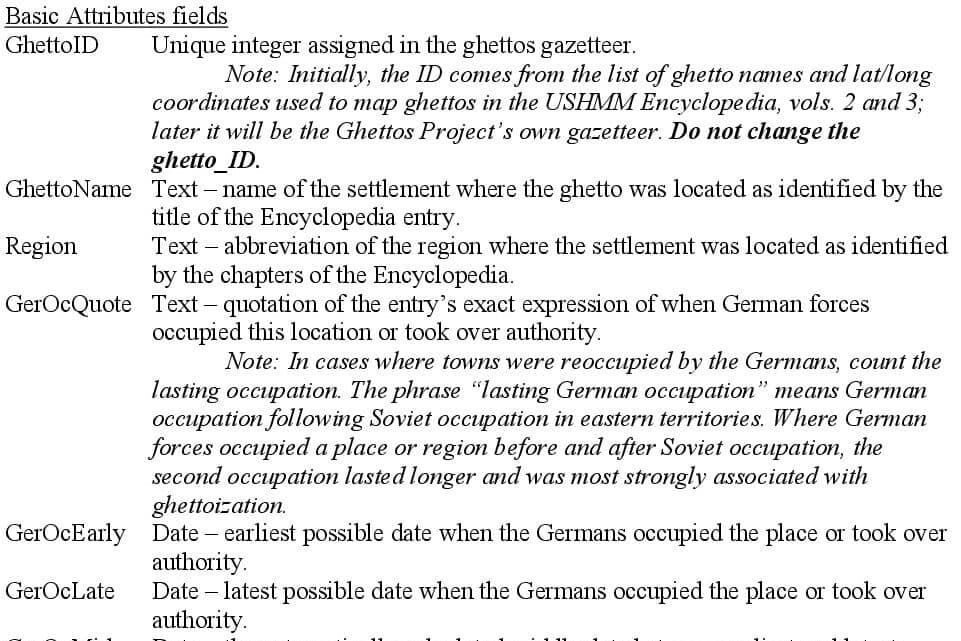
Make Maps and Graphs to Reach New Audiences
Visualize your data with expertly designed maps and graphs, like this one. We help you explore and communicate historical information through clear and insightful data visualizations.

Design Interactive Web Applications
Create engaging applications that let your audience explore your history in their own way. We develop bespoke web platforms that visualize your data accurately and appropriately.

Develop Custom Data Tools
Make your data tools do exactly what you need. We tailor applications to your project so data entry, processing, analysis, and visualization is easy for anyone.
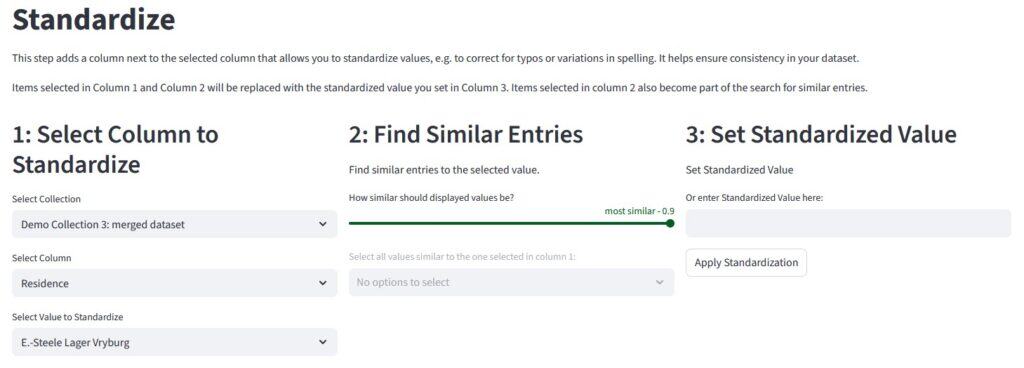
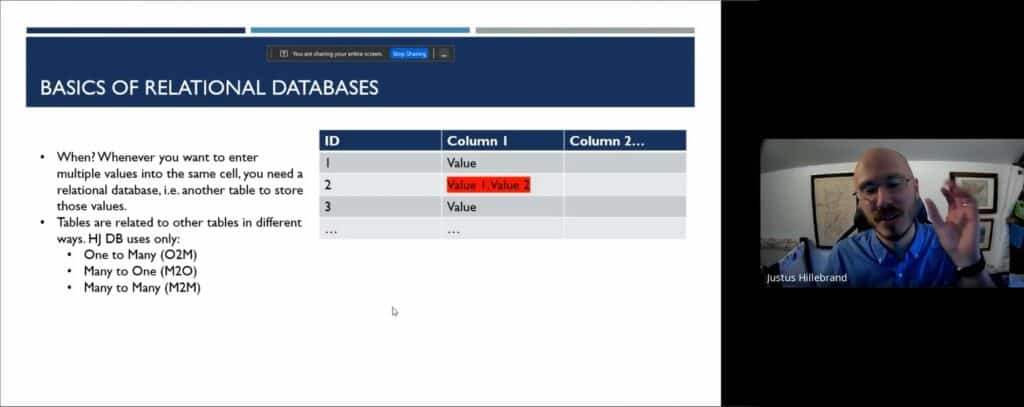
Learn How to Do Digital History Yourself
Create and maintain your own bespoke digital history projects. We offer accessible trainings designed to fit your ideas, your skill level, and your resources.
Secure Funding for Your Digital History Project
Obtain the necessary funding for your project with our help. We provide support in identifying funders and crafting compelling grant applications, leveraging our dual expertise in technology and history.

Not sure where to start? Let’s talk.
Book a free 30-minute call to talk through a digitized collection or project idea. We’ll look at what’s possible with your materials and resources, and what a realistic first step would be. No pitch and no preparation needed. Just bring a collection or a question.
Classes
Design Your Digital History Project
Putting collections online isn’t the same as bringing them to life.
Learn how to turn your institution’s digitized materials into more than an online exhibit. In this two-session, small-group course, conceptualize a digital history project — turning sources into data, visualizations, maps, wikis, or interactive tools — that’s both compelling and feasible. Leave with an actionable concept, individual feedback from an experienced practitioner, and curated resources to build the skills you need.
Who this is for
- Museums, archives, and libraries with digitized collections.
- Historical societies and small institutions without in-house digital staff.
- Anyone who has digitized materials but hasn’t yet turned them into a project — or isn’t sure how.
- No coding or technical background required.
What you’ll walk away with
- An understanding of what digital history is and what it can do.
- A concrete, actionable digital history project concept, tailored to your institution’s collections and resources.
- Individual feedback on your specific idea, live in session two.
- A curated set of resources and next steps matched to what your project actually needs
- Optional add-on: a written project report — a detailed write-up of your feedback, resources, and next steps, formatted for grant applications. $99, available after session two.
How it works
The first session is a presentation of what kind of digital history projects are possible and what was needed to make specific example projects happen. With this inspiration, participants will work through a short take-home guide to conceptualize their own digital history project for their institution and collections.
The second session works through improvements to participants’ concepts and presents specific technologies, methodologies, and educational resources to make these projects a reality. Participants who want a written record of their feedback and next steps can add a custom project report after the course.
A worked example
Say your archive holds a decades-long run of city registers — names, addresses, professions. On their own, they’re a research resource for the few who want to look up individual people.
In this course, you’d work through what it would take to turn that same collection into something else entirely: extracted into structured data, visualized to show occupation statistics, mapped to show settlement patterns across a city or region, and published as an interactive platform the public can explore. You’d leave with a concrete plan — what data to extract, what tools to use, and what a funding application for that project would need to say.
Your own project will look different — this is one shape a digital history project can take, not a template.
About the instructor
Justus Hillebrand, Ph.D., has worked and published on digital history projects and methodologies since 2016, with partners at institutions as large as the United States Holocaust Memorial Museum and as small as local historical societies. Bridging the gap between digital technologies and history, he excels at mapping out what is possible and then seeing projects through from concept to publication.
If you would like to pursue your digital history project further, he is available for consulting, training, and full development service.
Next class
To be determined. Email to get on the wait list and I will be in touch with the next dates.
Also available to book for your organization or project(s) as private sessions. Email me about options or book an exploratory call.
Group size: up to 6 participants
Price: $299
About
Most digital projects are led by technologists who don’t know your field, or historians who can’t build the tool. We do both, so the result is technically sound, historically accurate, and genuinely engaging.
From concept to funding application to finished platform, we make sure your project actually gets built and actually gets used.

Justus Hillebrand, Ph.D., director of Digital History Consulting
I received my doctorate in History from the University of Maine in co-tutelage with the University of Cologne in 2021. In my graduate work, I received formal training in database management and geographic information systems (GIS) and applied these skills in several historical research projects. For my dissertation „To Know the Land with Hands and Minds: Negotiating Agricultural Knowledge in Late-Nineteenth-Century New England and Westphalia“, I used digital mapping and visualization of historical data to learn more about farm families who did not leave written historical sources.
In my work with the Holocaust Geographies Collaborative, I have developed relational database designs, written rules for data entry, trained team members, and mapped data in GIS since 2016. I have co-published with Dr. Anne Knowles and other Collaborative members in the International Journal for Humanities and Arts Computing.
Since 2019, I have been working as a contractor with the United States Holocaust Memorial Museum’s Applied Research Division on the development of a large-scale relational database for the Encyclopedia of Camps and Ghettos. Volume VII: Camps for Foreign Forced Laborers.
I also wrote about the connections between these projects to make the digital humanities more accessible for historians.
Digital History Consulting currently works with a number of colleagues on a contract basis to optimize the team for each unique project.